

Portfolio Update #1
January 20, 2026

I’m changing the way I run this blog. It used to be for occasional fundamental research. Not anymore. This is now my personal journal where I’ll document the journey of compounding capital. I’m growing a small portfolio in public and sharing everything: trades, holdings, allocation…
Long-only. No leverage. No options.
Why am I doing this? To keep a record of my decisions. By documenting wins and losses alongside my analysis, I stay accountable and invite the community to challenge my ideas. My goal is to constantly learn and improve, so I welcome any critique or well-reasoned thoughts.
What to expect going forward:
Weekly: A full portfolio update, trade summary and game plan.
Daily: Real-time moves and thoughts via Substack Notes (@theminicapital) and X (@TheMiniCapital).
To my old subscribers: I apologise if this isn’t for you. If it doesn’t add value, please feel free to unsubscribe. I don’t want to spam your inbox.
Performance Review (Q1’23-Q4’25)
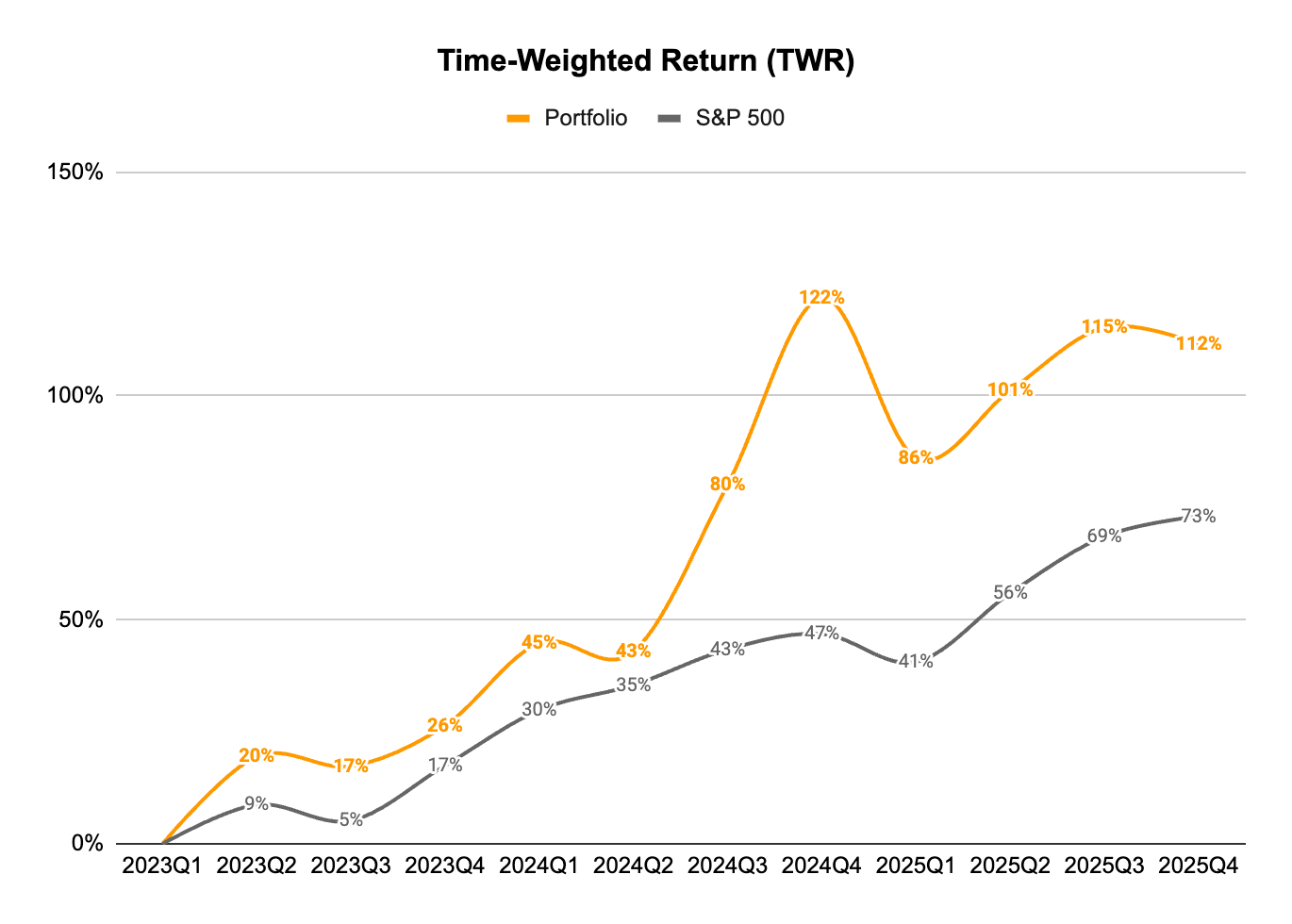
I started taking investing seriously in 2023. Since then, I’ve achieved a +112% TWR versus a +76% return from the S&P 500. (Since my broker, DEGIRO, doesn’t provide Time-Weighted Return data, I calculate this manually using the Modified Dietz Method to account for cash flows).
I’m happy with the performance so far, but I made substantial mistakes this past year. I suffered a large drawdown earlier in 2025 due to a lack of proper risk management, clinging to a “buy & hold” mentality on microcaps during the tariff craze. Even though I had some great trades throughout the year, such as:
PLTR: +930% (remaining position I carried into 2025)
ZOMD: +180%
BABA: +96%
AMD: +48%
BIDU: +43%
KITS: +40%
I spent much of the last year recovering from avoidable errors. I lacked proper sell rules and didn’t use stop-losses, leading me to enter positions too early, cut losers too late, or round-tripping significant profits back to the market. PYPL is the perfect example. It remains my largest position. I entered 2025 with a large position built below $60 and had the chance to sell at $90 when the market started correcting. Instead, I held on and have now round-tripped those gains twice.
I’ve since pivoted. I’m studying technical analysis and veteran traders to balance my fundamental roots. This year is about improving the equity curve, cutting drawdowns, and being consistent with entries and exits.
Recent Moves
Closed Positions:
DRX: -0.5%
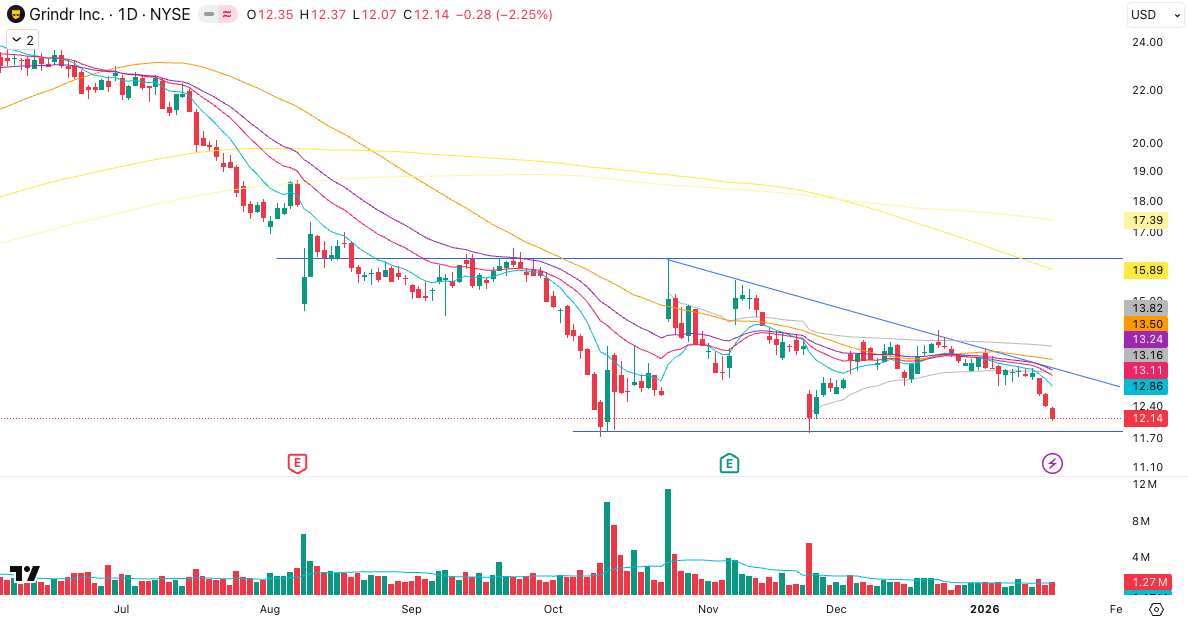
GRND: -2.5% | -1.9% | -2.2%
NVO: +3.0%
BABA: -1.4%
AES: +6.3%
SNAP: +6.2%
DLO: +3.0%
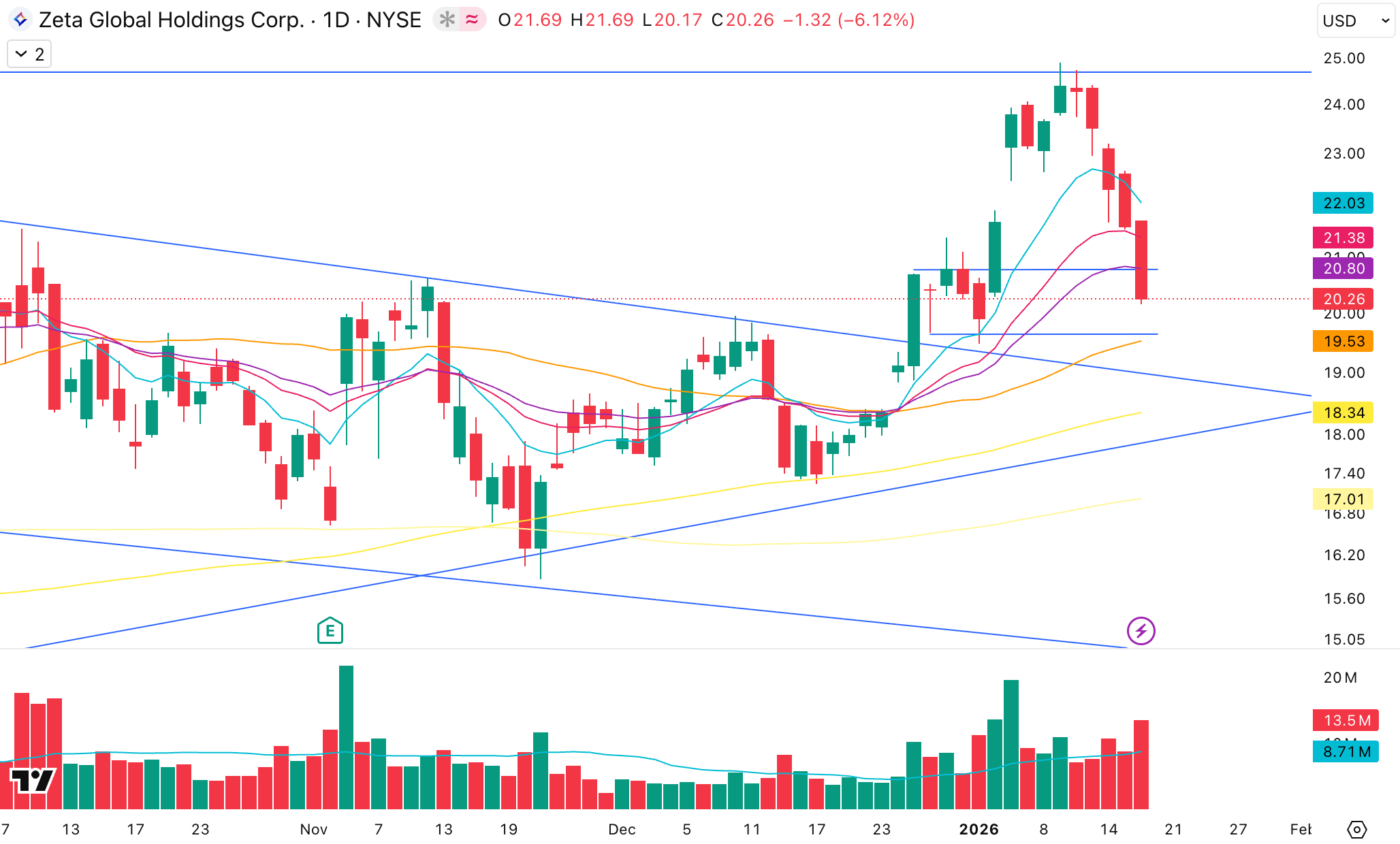
ZETA: +29.2%
PATH: +12.6%
STZ: +4.4%
OSCR: +11.1%
TSEM: -2.3% | -0.6%
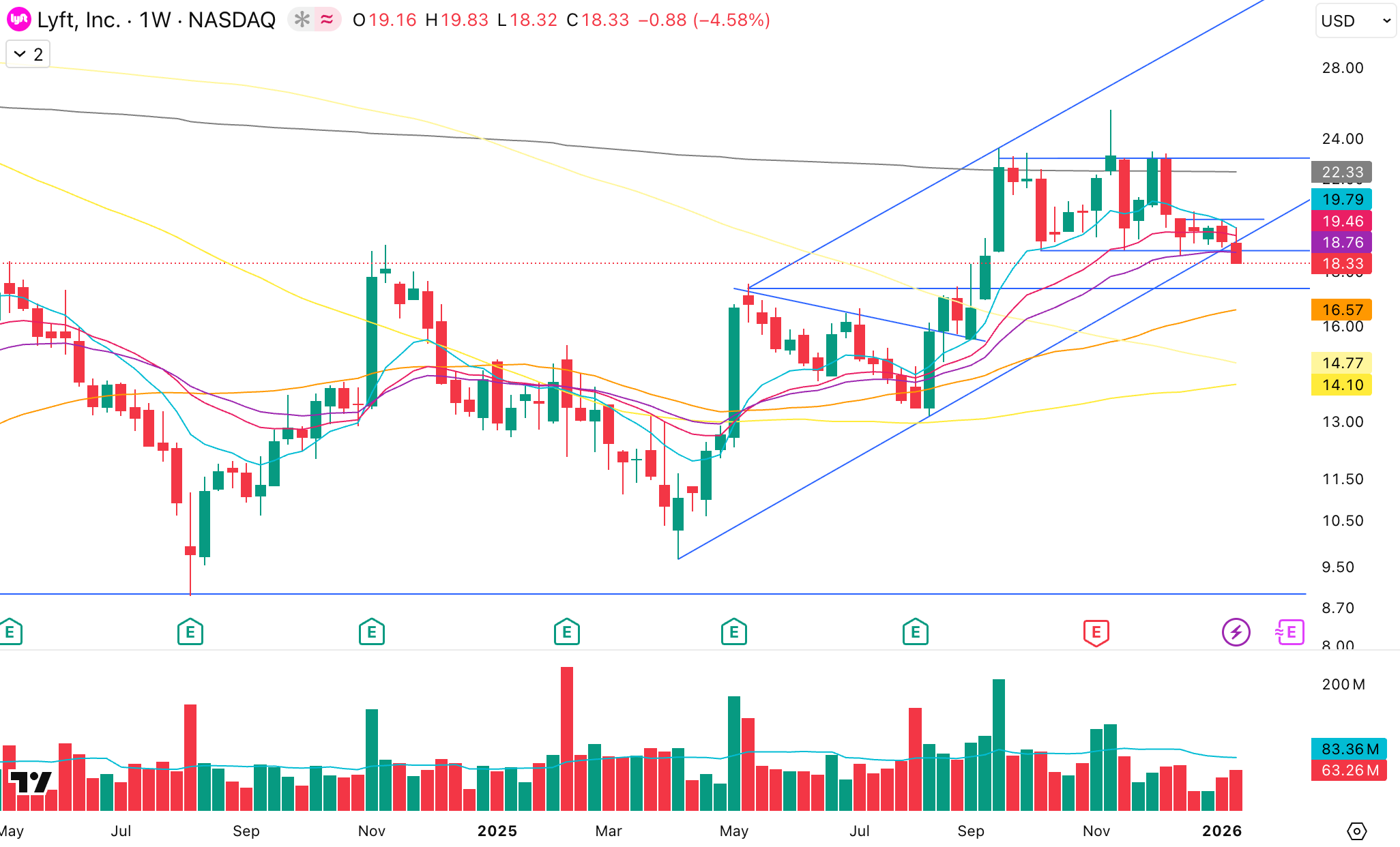
LYFT: -5.1%
Biggest losers were GRND and LYFT. On GRND, I got stopped out three times (two on the same day). I need to learn to step out and wait if the market is telling me the setup isn’t right.
On LYFT, the structure was under threat. I bought support, but it broke at the end of the week. I’ll watch to see if it can reclaim that level.
Current Portfolio
Cash: 69.3%
PYPL: 18.7% | Cost basis $55.39 | -9.8%
UNH: 12.1% | Cost basis $327.33 | +8.8%
I’ve exited almost all positions in the past two weeks. Some into strength, others because of tight stops. I simply don’t like how the markets have been trading.
Week Ahead
As I posted on January 15:
I still stand by this. And now with Trump showing some lunatic behaviour against Europe because of Greenland, we might actually start to see the markets breaking and I want to be prepared with cash for that scenario.
If markets show resilience and positive structure, I’ll increase exposure again.
On my watchlist for possible re-entry:
ZETA on support at the 50-Day SMA or at the reclaim of the 20-Day EMA.
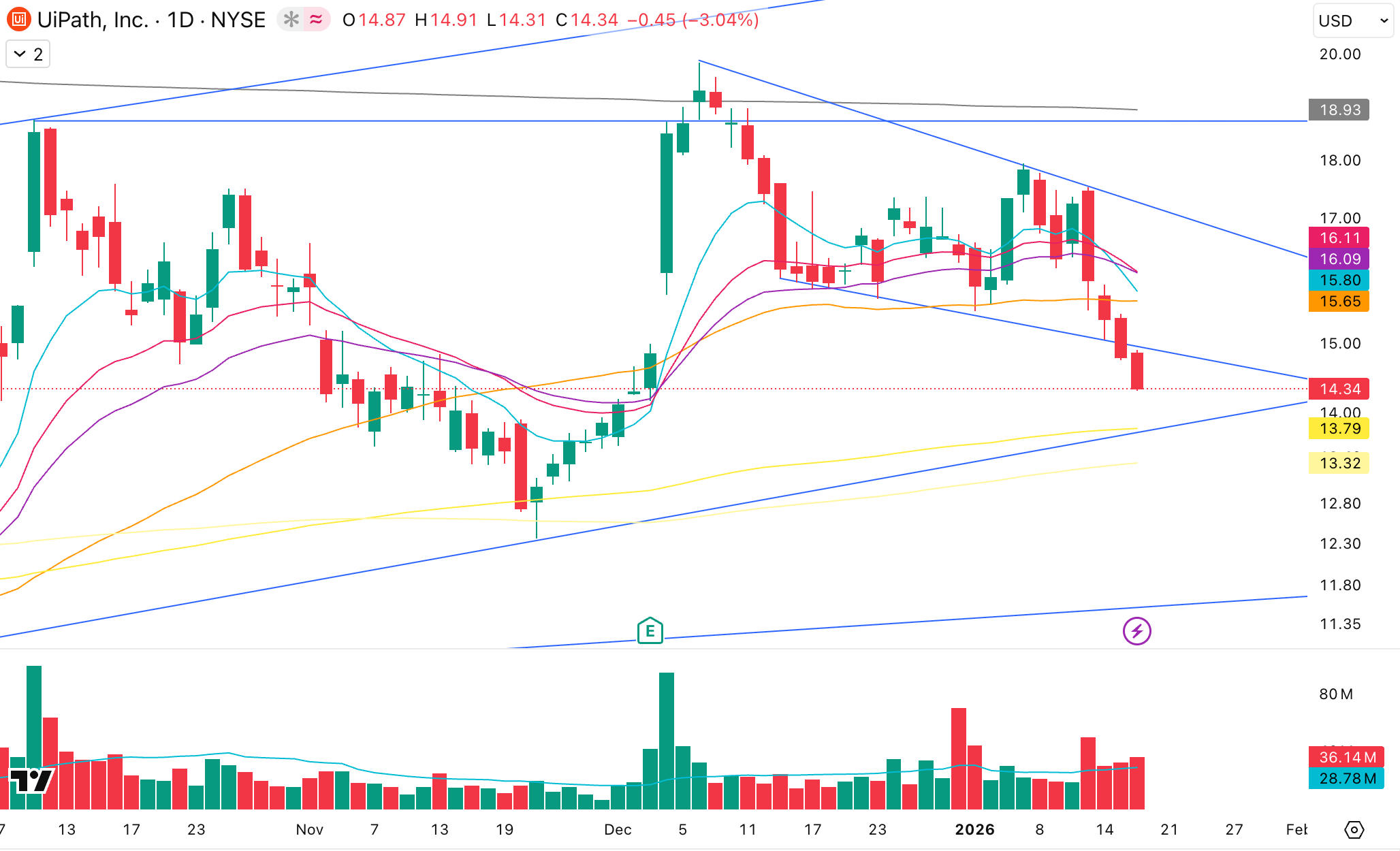
PATH on support at the 200-Day SMA.
OSCR on a range breakout or at the base if it breaks lower.
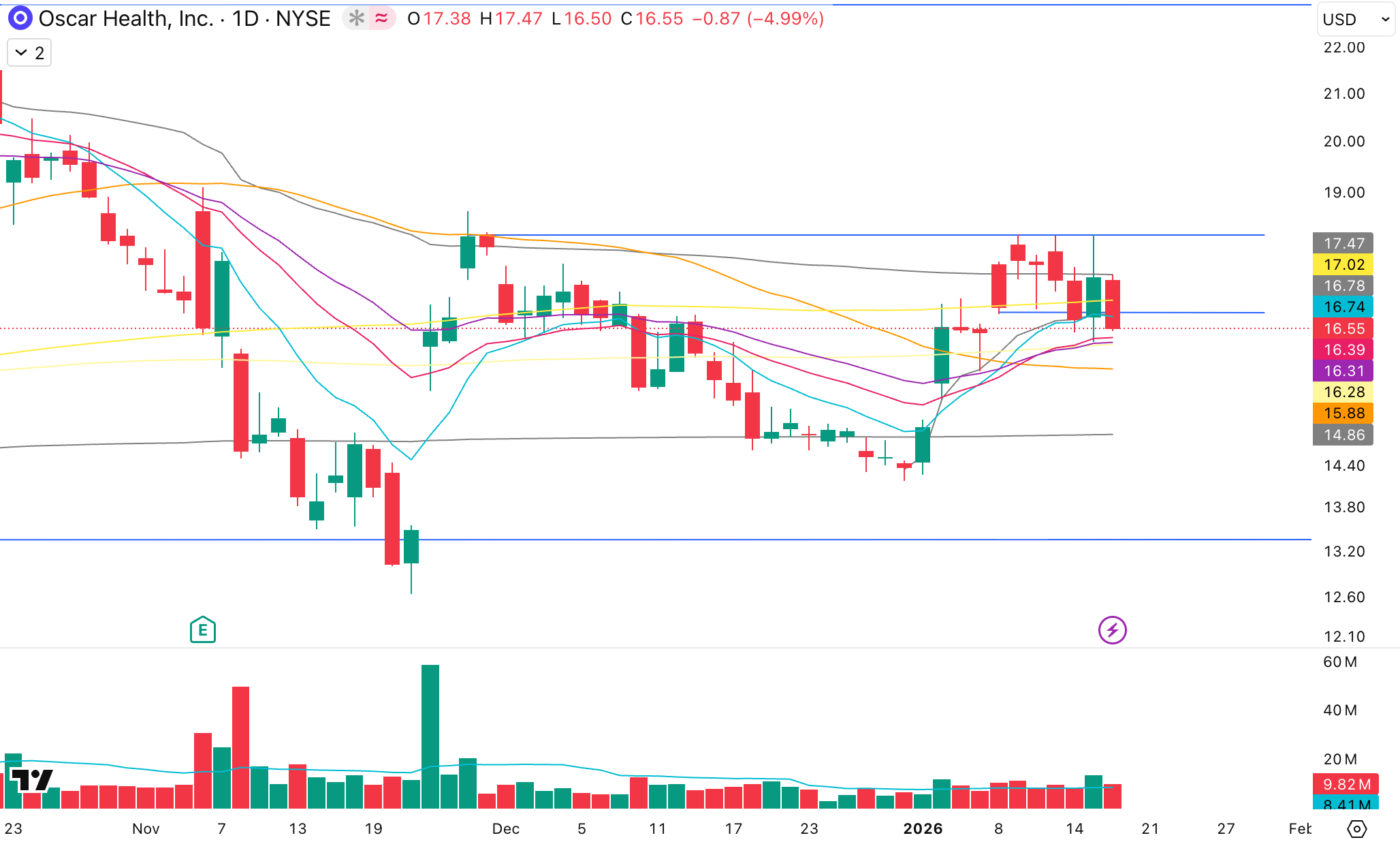
These three are fundamentally undervalued and I know their story well. I sold them because I needed to protect my profits, but would love to get a chance to get on the train again.
Trading Stats (YTD)
# Wins: 8 | # Losses: 8 | Win rate: 50.0%
Avg. Win: +9.5% | Avg. Loss: -2.0%
Max. Win: +29.2% | Max. Loss: -5.1%
Disclaimer: For informational purposes only. Not financial or professional advice. I am not a licensed advisor. All investing involves risk of loss. You are solely responsible for your own research and decisions. Use of this content is at your own risk.
Interesting pivot toward technical discipline after the drawdown. The stat that jumps out is the 3:1 avg win-to-loss ratio (8.6% vs 2.7%) which offsets the 50% winrate nicely. Curious how you'll handle the PYPL position if it retest that $55 cost basis zone, given the round-tripping pattern mentioned. Moving to higher cash (69%) makes sense if distribution vol ume keeps printing.
I actually got stopped out on PYPL today for a loss. I don't mind buying PayPal higher later, but I will make sure it is already turning to an uptrend. Got caught too many times trying to catch bottoms. I've realised that the goal is not to pick the bottom or the top. It is to ride most of the move with controlled risk.